

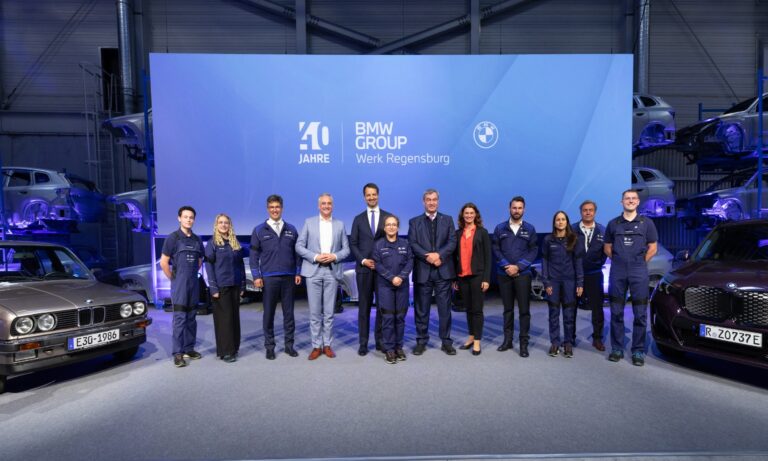
Regensburg. BMW Group Plant Regensburg celebrates four decades of production in series, thus consolidating its position as one of the most important industrial company in Europe. Since the start of its operations in 1986, the plant of German has made nine million vehicles, and received investment than six billion euros.
Located in Bavaria, Germany, this installation represents a fundamental part of the strategy of global production of BMW Group. Their ability to manufacture vehicles with different drive technologies in the same assembly line reflects the evolution of the automotive industry and the transformation that currently lives the brand.
In addition to its industrial importance, Regensburg maintains a direct connection with Latin america, as it produces models such as the BMW X1, which positioned itself as the vehicle BMW sold in the region at the end of the third quarter of 2026.
Four decades of evolution industrial
The history of BMW Group Plant Regensburg began in October 1986, when the first car came out of their facilities: a BMW 3 Series generation E30. A month after officially started the production in series, marking the beginning of a career that would transform the plant into a reference of the manufacturing German automotive.
Since then, Regensburg has experienced a steady growth in infrastructure, technology and productive capacity. Currently, the plant is the BMW Group with the largest production volume in Europe and has approximately 9,000 jobs have been created since its opening.
During the celebration of its anniversary, Raymond Wittmann, a member of the Board of Management of BMW AG responsible for Production, highlighted the importance of this installation for the German industry.
The manager acknowledged that the nine million vehicles produced are the result of four decades of innovation, technological development and commitment of the employees. He also stressed the need to maintain investment and competitive conditions that will allow the strengthening of the industrial production in Germany.
The commemoration was attended by representatives of political, economic and social, who recognized the contribution of the plant to the development of Eastern Bavaria.
A plant capable of producing more than 1,400 vehicles per day
One of the highlights of the BMW Group Plant Regensburg is your production capacity. Currently, its facilities operate 24 hours a day by using a scheme of three shifts, which allows you to maintain a pace of production constant.
Every 57 seconds, a car leaves the assembly line, a number that translates into more than 1,400 cars produced daily for clients in different international markets.
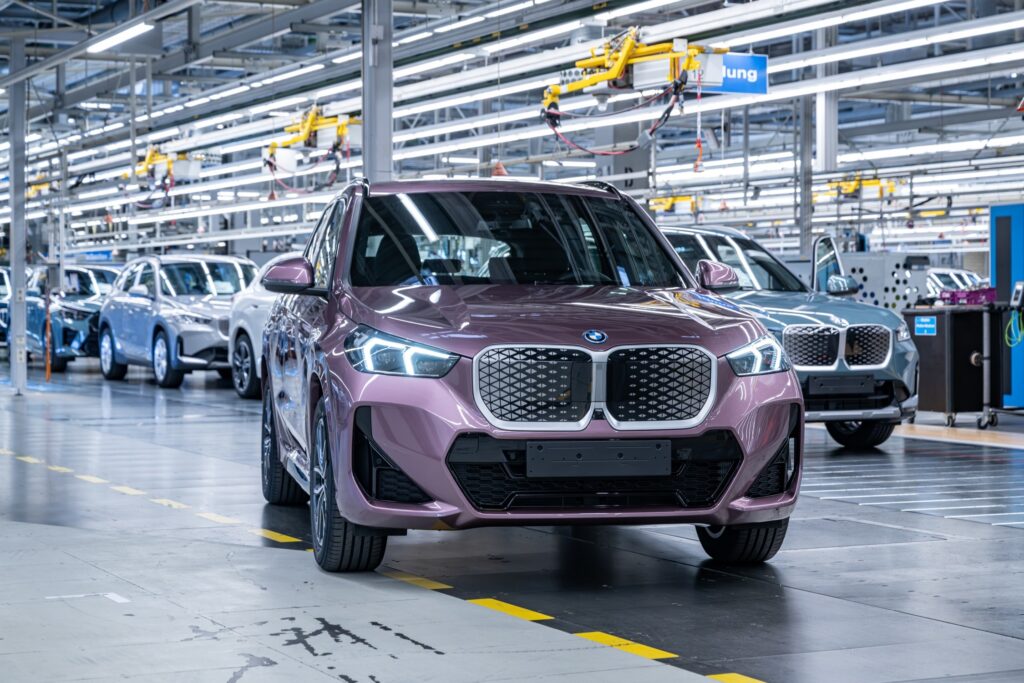
However, the volume is not his only strength. The plant stands out for its flexibility, industrial, as it can manufacture automobiles with internal combustion engines, hybrid systems, pluggable and propulsion fully electric within the same production line.
This strategy allows you to respond to the diverse mobility needs of each market without relying on facilities exclusive to a single technology.
The model of flexible production is also part of the approach of opening technology of the BMW Group, through which the company seeks to provide diverse alternatives of mobility in line with the preferences of their customers.
BMW X1: the best-selling model of the brand in Latin america
The importance of Regensburg transcends the borders of europe. Currently, the plant produces four models are fundamental for the international supply of BMW: the BMW X1, BMW X2 and their respective versions fully electric, BMW iX1 and BMW iX2.
Among them, the BMW X1 occupies a position that is especially relevant for the Latin american market.
According to BMW Group, to the end of the third quarter of 2026, the BMW X1 with a combustion engine was the vehicle BMW sold in Latin america, confirming its importance within the portfolio, regional.
For its part, the BMW X2 continues to be among the models preferred by clients in the region, thanks to its proposal that combines sporty design, technology and versatility.
The production of these vehicles in Regensburg demonstrates how an industrial facility at european level can meet the needs of different international markets.
In addition, the simultaneous manufacture of electric versions and combustion allows BMW to maintain a diversified supply while advancing in their process of electrification.
Nine million vehicles-a BMW iX1 mark the anniversary
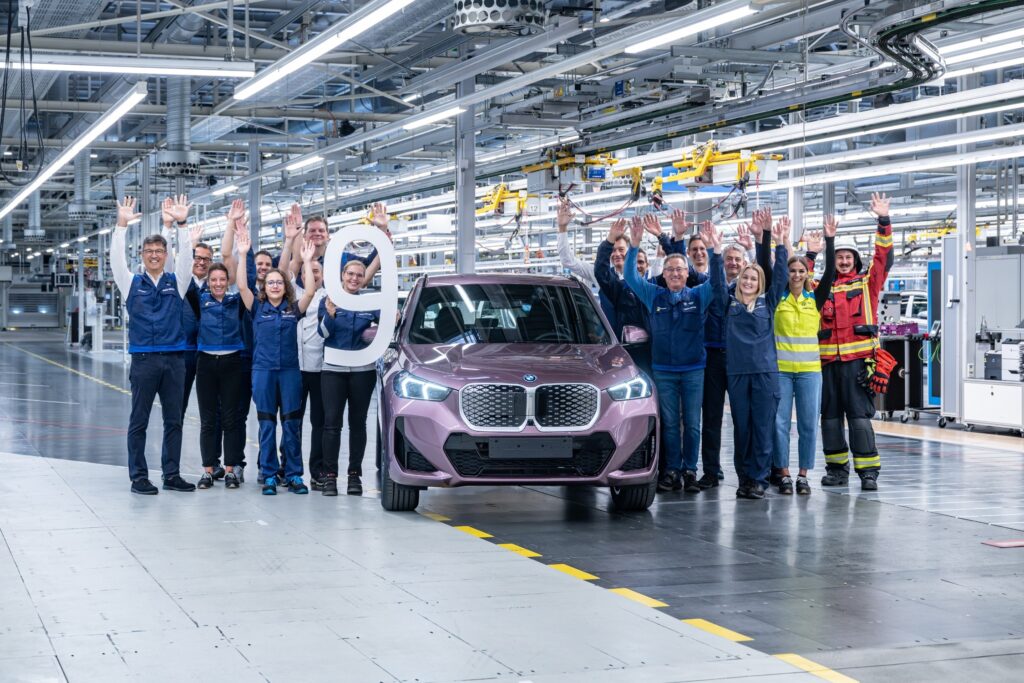
In September of 2026, BMW Group Plant Regensburg reached one of the most important milestones in its history: the manufacturing of vehicle number to nine million.
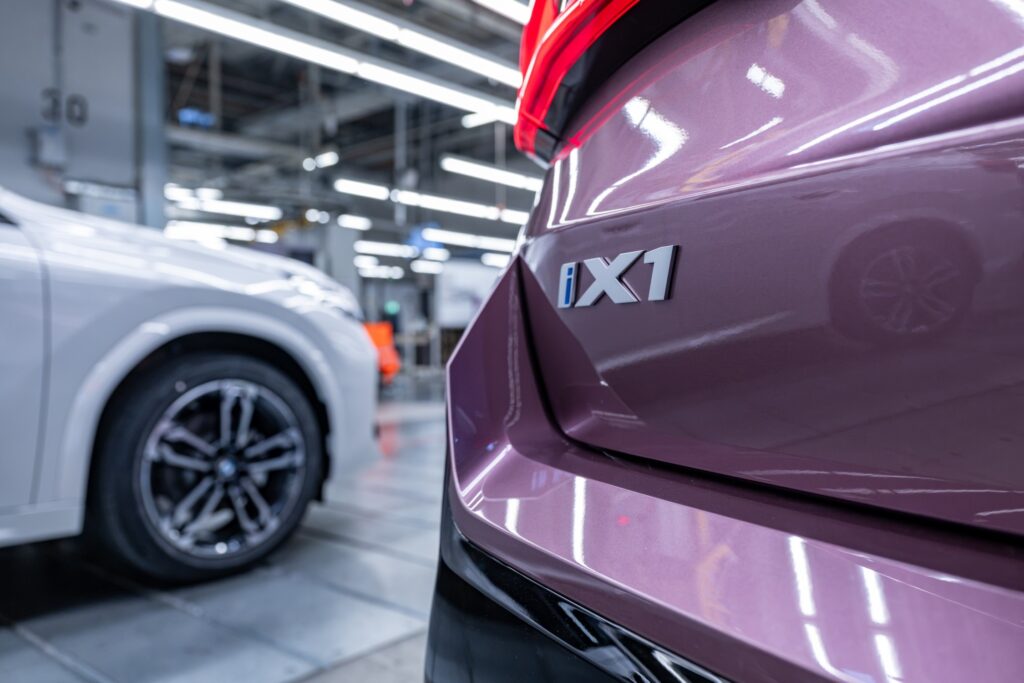
The car chosen by the production sequence to represent this event was a BMW iX1 fully electric, finished in the exclusive color BMW Individual Velvet Orchid II Metallic.
The unit was manufactured in accordance with the specifications of its owner and subsequently delivered to a customer in Sweden.
This event reflects the technological transformation that has experienced the plant from its earliest years.
While in 1986 started manufacturing the BMW 3 Series E30, four decades after one of its major milestones productive is represented by an all-electric vehicle.
The evolution also demonstrates the ability of BMW Group to adapt its industrial processes to the new generations of cars without giving up the flexibility that characterizes its facilities.
Investments for the NEUE KLASSE and the future of BMW
The anniversary of Regensburg not only represents an opportunity to remember their history, but also to see the projects that will define his future.
From 2023, the BMW Group has allocated approximately € 400 million to facilities and structures of production related to the NEUE KLASSE, its new generation of vehicles.
These investments are part of a process of industrial upgrading, which seeks to prepare the facilities for the future manufacturing needs.
The NEUE KLASSE represents a strategic stage for BMW, especially for its focus on electrification, digitalization and new technologies applied to the car.
In this context, Regensburg will continue to play an important role within the production network of the company.
The modernization of its facilities also shows that the transition to new technologies requires more than developing vehicles: involves transforming processes, infrastructure and industrial capacities.
Regensburg and its impact on the German economy
Beyond cars, BMW Group Plant Regensburg represents an economic engine to Eastern Bavaria.
The investments made during its four decades of operation have contributed to the growth of service providers, service companies and small and medium-sized businesses related to the automotive industry.
Currently, about 55% of the employees of BMW Group work in Germany, a country that continues to be the center of your industrial network.
For 2025, the company manufactured again more than a million vehicles in its German plants, a figure that represents approximately one out of every four cars produced in the country.
This industrial presence also responds to the strategic principle called Local for Local, which BMW Group seeks to maintain a balanced relationship between production and the sales in each region.
In Europe, the volume of manufacture of the company corresponds to the demand of vehicles BMW Group in that market, contributing to an industrial structure connected with its major shopping destinations.
To Regensburg, this strategy means to keep their importance within the global network of production, at the same time that it strengthens the employment and the economic activity of its environment.
40 years of history and a new stage ahead
Since the first BMW 3 Series E30 made in 1986 to the BMW iX1 that marked the nine million units, BMW Group Plant Regensburg has travelled a road of constant transformation.
His numbers reflect the magnitude of this evolution: more than six billion euros invested, approximately 9,000 jobs created, more than 1,400 vehicles produced on a daily basis and an increasing ability to integrate different technologies of propulsion.
In addition to its relevance for Latin america, where the BMW X1 continues consolidating its position as one of the main representatives of the brand.
With new investments aimed at the NEUE KLASSE, the plant German prepares to face the upcoming challenges of the automotive industry.
Four decades after the start of operations, Regensburg demonstrates that the evolution of industrial does not only produce more vehicles, but in developing the capacity to manufacture cars of the future.
Source: BMW Group