

Munich. The automotive industry is undergoing the most profound transformation of its recent history. In this context of rapid change, technical training, and the preparation technology of the new generations is essential. With the official start of the academic year on 1 September, the BMW Group training program 2026 opens its doors to a large cadre of young talent that will drive the future of mobility.
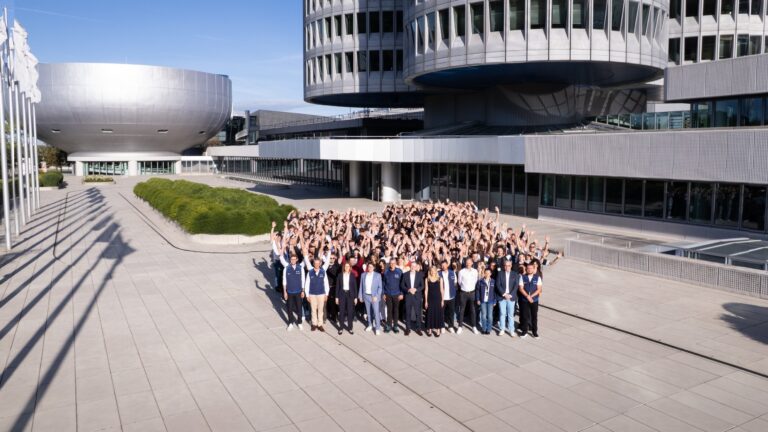
In its iconic headquarters of Munich, the German company welcomed 225 new trainees and students from programs of dual education within the modern Talent Campus. However, the commitment of the bavarian manufacturer extends to the national level: in total, the company has enabled a 1,200-seater training strategically distributed throughout Germany. These positions cover multiple key areas, ranging from industrial production to the development of software and sales.
Skills of the future: artificial Intelligence, digitization and automation
The core teaching this new edition is not limited to the mechanical or engineering-traditional. The BMW Group training program 2026 situated in the center of the curriculum of the intensive development of key competences for the digital age. The artificial intelligence (AI), advanced automation and digitization integral of industrial processes constitute the main axes on which pivotará the learning of the students.
The training programmes are continuously adapted to the technological demands global. For this reason, the BMW Group emphasizes the mastery of technical skills in disciplines essential:
Electronics architecture and software: Creation and support of embedded systems for vehicles defined by software.
Analysis of massive data (Big Data): Optimization of production processes using analytical models predictive.
Plant engineering and industrialization: Automation of assembly lines and integration with robotics latest generation.
Use ethical and responsible AI: Training critical to take advantage of the algorithmic tools without neglecting the human judgment.
Artificial intelligence, in particular, is radically transforming the work environment in the automotive sector. For this reason, the consortium bavarian teaches the conscious application and ethics of generative models and interactive. The primary objective is to combine the immense possibilities of the technology with technical expertise, critical thinking, and personal responsibility.
New leaderships and welcome building in Munich
The beginning of the year training coincided with an important milestone in the dome of directors of the corporation. Dorothea von Boxberg formally assumed his post as member of the Board of Management of BMW AG, leading to the division of Human Resources and Labor Relations.
Next to Martin Kimmich, chairman of the Business Committee of BMW AG, and Peter Weber, director of the plant Munich, the executive participated actively in the official reception of the young learners. During the opening day, Von Boxberg highlighted the importance of combining the enthusiasm of the new generations with the innovative vision of the group.
Technical education as a key pillar of the corporate strategy
For union representatives, and the committee of the company, maintaining a training structure solid is essential to ensure the operational stability for the long term. The constant training not only ensures high-skilled jobs, but also to protect the competitiveness of the German industry in front of the global market.
From the perspective of directors of the Company Committee, headed by Martin Kimmich, professional preparation is a true strategic investment in the human capital of the organization. For more than 100 years, the vocational training has been a cornerstone within the identity operation of the brand.
Key factors of the educational success in the BMW Group:
Attraction proactive qualified talent: Creating internal specialists in the disciplines emerging where scarce the profile in the free market.
Building innovation capacity: Immediate integration of fresh ideas of trainees in real-world environments of production and R & D.
Accompaniment in the transition to electric and digital: Professional recycling aligned to the operational needs of the range of vehicles.
Stability of employment after graduation: High rates of direct insertion and itineraries professional career continued within the corporate network.
Global reach of the educational ecosystem of BMW Group
The training offer of the industrial group is above and beyond the German borders. Currently, the company conducts about 30 professional training programs in traditional and around 20 programs of studies dual spread over 20 production facilities and more than 20 international branches in different continents.
This international presence allows us to adapt the curricula to the local standards of each market, ensuring that the standard of industrial-grade BMW is kept uniform in its factories around the world.
Source: BMW Group