

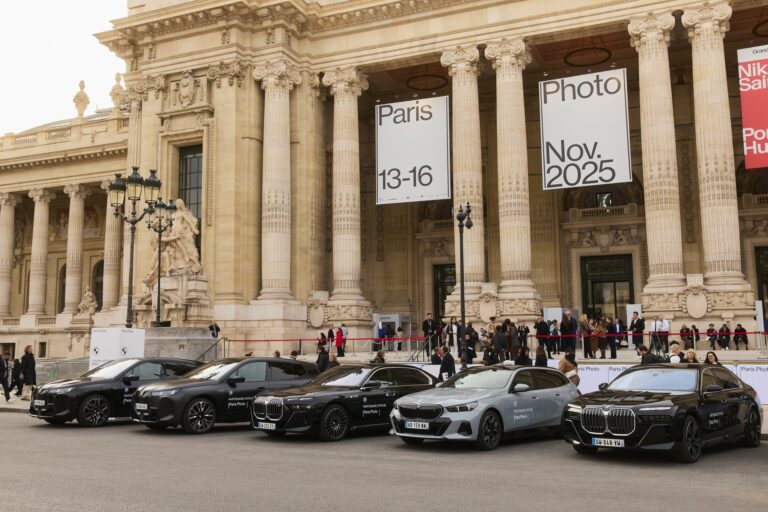
Munich/Paris. BMW Paris Photo 2026 will bring together art, science and experimentation visual in a new presentation of “vitreous body”, a project developed by the artist Lara Tabet and is the curator Yasmine Chemali. The exhibition will be open from 12 to 15 November at the Grand Palais in Paris, as part of a cultural collaboration that BMW keeps from 24 years ago with one of the fairs in the most important international dedicated to photography.
The involvement of BMW France in this edition represents a new opportunity to explore the relationship between artistic creation and scientific research and contemporary environmental challenges.
After his initial splash in Les Rencontres d’Arles, the exhibition will come to Paris with a configuration has been completely renovated and three new works developed specifically for the Grand Palais.
In addition, the project forms part of BMW ART MAKERS, an initiative to support contemporary creation that has received official recognition from the French Ministry of Culture within the celebrations of the Bicentennial of the Photography.
BMW Paris Photo 2026: a cultural cooperation of 24 years
Since 2003, BMW maintains a collaboration with Paris Photo, consolidating a relationship that links the automotive company with the development and dissemination of contemporary photography.
Along these 24 editions, the German brand has supported initiatives that enable artists to experiment with new techniques, materials and forms of visual representation.
This participation also reflects a vision of culture as a space to explore issues related to the society, technology and the environment.
In this context, BMW ART MAKERS has become one of the main instruments of support from the company to the visual arts.
The program is offered annually to a duo composed by an artist and a curator with the opportunity to develop an original project, from its early research until its presentation to the public.
For BMW Paris Photo 2026, the winners selected are Lara Tabet and Yasmine Chemali, who presented a proposal that combines biological processes, experimental photography, reflection and the environment.
The Grand Palais receives a new version of The vitreous body
The exhibition “The vitreous body” will arrive at the Grand Palais after its presentation at Les Rencontres d’Arles, where he awakened the interest of professionals in the art and visitors.
However, his participation in Paris Photo not consist only in moving the work to a new enclosure.
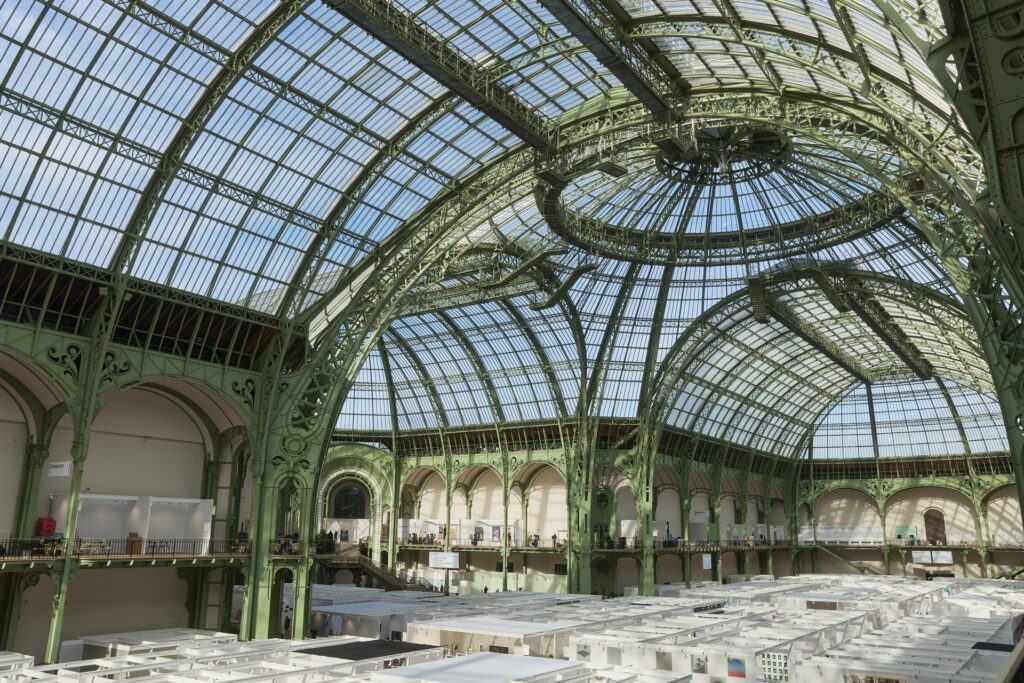
The artist and the curator have developed a distribution expository different, designed specifically for the architectural features of the Grand Palais.
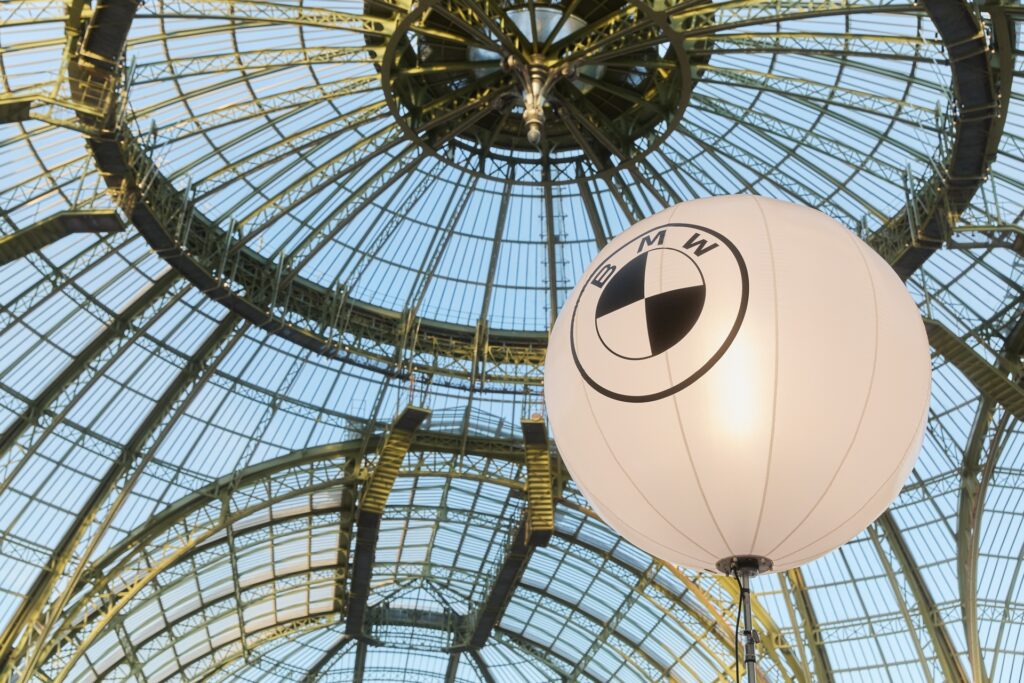
Under its iconic glass cover, the project will incorporate three new pieces that will expand the possibilities of visual and conceptual of the original proposal.
This transformation will allow to establish new relations between the works, the lighting and the architectural space.
Also, the presentation seeks to explore the connections between living organisms, photographic materials, and the ecosystems they form part of our environment.
The vitreous body: when microorganisms created images
The title of the exhibition makes reference to the vitreous humor, a clear substance and a gel-like substance that occupies the interior of the eye and allows the passage of light to the retina.
From this concept, Lara Tabet develops an artistic research that challenges the traditional ways of producing and observe images.
His work combines knowledge of clinical pathology with experimental techniques of photography, using biological processes as tools of creation visual.
To develop the project, the artist collects water samples in Marseille and its surroundings, building a personal record of different aquatic environments.
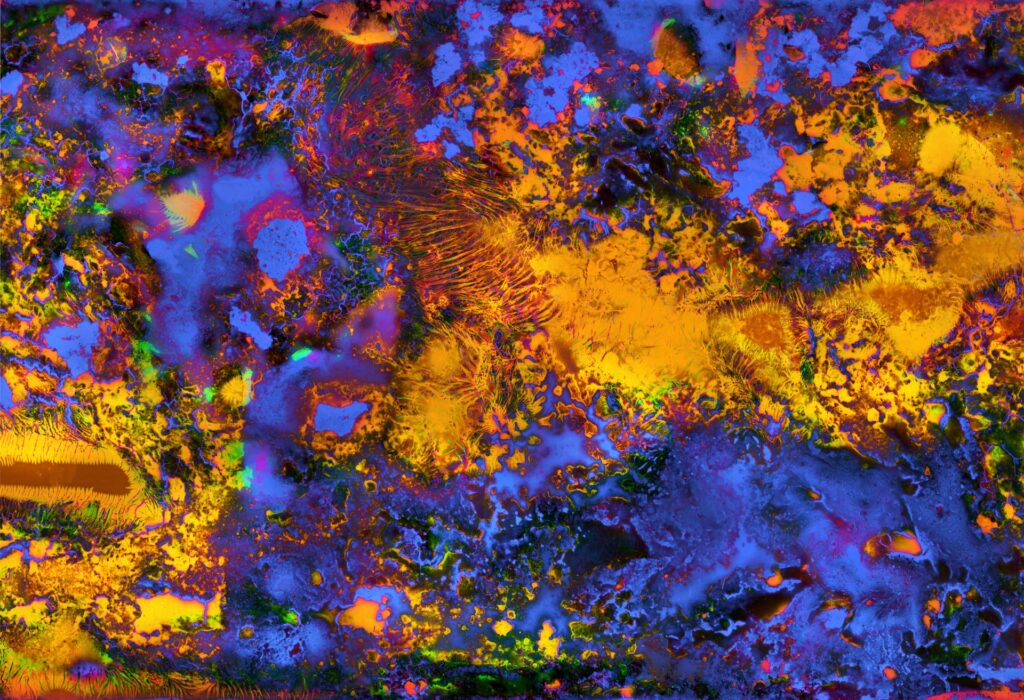
Subsequently, these samples were incorporated into a procedure known as bacteriografía, by which microorganisms interact with light-sensitive materials.
In particular, the microbiological activity can modify the layers of gelatin present in the films, creating patterns by processes of erosion and corrosion.
The result are images that are not directly represent the landscapes of where the samples were taken, but show traces of organisms and processes that normally remain outside of our perception.
In this way, the photograph becomes a tool for monitoring environmental phenomenon from a different perspective.
Experimental photography to explore the environment
One of the most interesting aspects of “vitreous body” is their ability to relate to the artistic production with ecological issues contemporary.
The images obtained using microbiological processes allow us to reflect on the environmental conditions of the places where they collected the samples.
On the other hand, the project raises questions about the pollution, the transformations of ecosystems and the relationships between human beings and other life forms.
Instead of using photography only as a medium of representation, Lara Tabet that allows agencies to participate directly in the formation of the images.
This methodology introduces elements of change and unpredictability, since the results depend on the interaction between materials and biological processes.
Thus, each piece becomes a visual record of phenomena that occur at a scale difficult to observe with the naked eye.
New works in bioplastic extend the exhibition in Paris
For BMW Paris Photo 2026, the project will incorporate new creations made with bioplastic, a material that allows you to continue investigating the relationships between the chemical processes in the living organisms and the production of images.
These parts extend the language of experimental exposure and propose new possibilities for understanding photography beyond its conventional carriers.
At the same time, the works are presented as a contemporary reinterpretation of the stained glass windows.
Traditionally associated with the religious architecture, and the representation of symbolic scenes, stained glass acquire here a different function.
In “The vitreous body”, the transparency, the light and the material transformations allow the display of processes related to water, pollution, and ecological interdependence.
In this way, the project establishes a dialog between age-old techniques of representation and new forms of artistic experimentation.
The architecture of the Grand Palais will also play an important role, as its cover glass will provide a context particularly related with the concepts of transparency and perception present in the exhibition.
BMW ART MAKERS, fosters new forms of artistic creation
BMW ART MAKERS is a program of patronage conceived as a creative laboratory dedicated to the visual arts and the contemporary production of images.
Its main feature is to offer creative freedom to the artists and curators selected, allowing them to develop projects that require research, experimentation and new approaches techniques.
Unlike an exhibition conventional, the initiative accompanies the whole process of artistic production.
This includes conceptual development, research materials, the performance of the works and their subsequent presentation to the public.
In addition, the program promotes the exchange of knowledge between different disciplines, expanding the possibilities of collaboration between art, science and technology.
Its official recognition by the French Ministry of Culture within the Bicentenary of the Photograph represents an endorsement of its contribution to the development of new visual practices.
This distinction is of particular importance during 2026, when France celebrates two centuries of the history of photography and its evolution as a medium of artistic, documentary and experimental.
Lara Tabet: a path between the science and the visual arts
Lara Tabet is a visual artist and pathologist clinical lebanese established in Marseille, France.
His work is characterized by integrating scientific knowledge with experimental photography, bio-art, installation, video and sculpture.
Through these disciplines, investigates the relationships between living organisms, the technologies and the transformations of the environment.
His training includes studies of clinical pathology in Beirut and photography in New York, a combination that has directly influenced the methodology of art.
Throughout his career he has participated in international exhibitions and residency programs, in addition to receiving awards such as the Prize, Mentoring, Prince Claus in 2022.
It has also formed part of the european programme STARTS for Water II, dedicated to promoting the collaboration between art, science and technology in water resources.
Yasmine Chemali: a look curatorial about contemporary photography
Yasmine Chemali is a curator specializing in photography, historical archives and contemporary practices of visual representation.
His academic background includes studies of the history of art, museology and heritage conservation at the École du Louvre and the École des Hautes Études en Sciences Sociales.
During his career he has worked with major collections of photographic art in Lebanon.
Among its responsibilities include the direction of the Collection Fouad Debbas and the supervision of the collections of modern and contemporary art Museum Sursock, between 2014 and 2020.
From 2020 directs the Centre de la photographie de Mougins, French institution dedicated to the promotion of contemporary photography through exhibitions, residencies and publications.
His curatorial approach seeks to give visibility to narratives, underrepresented, and to explore the role of images in the construction of social discourses and cultural.
In “The vitreous body”, his collaboration with Lara Tabet possible to articulate an exhibition proposal that connects the scientific research with the visual experience of the audience.
BMW strengthens its commitment to electric mobility during Paris Photo
In addition to its cultural participation, BMW France will provide a fleet of electric vehicles to facilitate the displacement of collectors, gallerists, artists and guests during Paris Photo 2026.
This initiative forms part of the mobility services associated with the fair and its program of guest.
In this way, the company integrates its activity automotive with its presence in one of the international meetings highlight of the arts calendar.
The participation of electric vehicles also reflects the importance that the electrification has acquired within the mobility strategy of BMW.
Although the role of this edition will be focused on the creation photo, the brand will maintain a presence linked to both the cultural support as their mobility solutions.
Dates and location of BMW ART MAKERS in Paris Photo 2026
The exhibition “The vitreous body” will be available for visitors during the four days of Paris Photo 2026.
Event: Paris Photo 2026.
Exposure: The vitreous body.
Artist: Lara Tabet.
Curator: Yasmine Chemali.
Program: BMW ART MAKERS.
Dates: From 12 to 15 November 2026.
Place: Grand Palais, Paris, France.
Location: Stand BMW ART MAKERS C01.
The presentation will present a proposal that combines scientific research, experimental materials and new forms of photographic expression.
Also, will provide an opportunity to discover how the contemporary creation can help to broaden our perception of the natural processes and environmental.
BMW Paris Photo 2026: a new perspective on the art and innovation
The involvement of BMW Paris Photo 2026 demonstrates how partnerships between companies and cultural institutions can contribute to the development of artistic projects that explore new forms of knowledge.
For 24 years, the relationship between BMW and Paris Photo has allowed us to support proposals linked to the evolution of photography and its expressive possibilities.
Now, by “vitreous body”, Lara Tabet and Yasmine Chemali present a research that transforms microorganisms, photosensitive materials and chemical processes in elements of creation visual.
The incorporation of new works in bioplastic and the adaptation of the exhibition at the Grand Palais broaden the scope of a proposal that invites us to reconsider the relationship between art, science and nature.
In the context of the Bicentennial of the Photograph, this initiative also remember that the development of the images is not solely dependent on new cameras or digital technologies, but the ability of artists to experiment with the materials and challenge the limits of each medium.
With BMW Paris Photo 2026, the German brand continues its engagement with contemporary culture, while “vitreous body” proposes a different way of observing the world: one in which science and creativity, to reveal that which usually remains invisible.
Source: BMW Group