

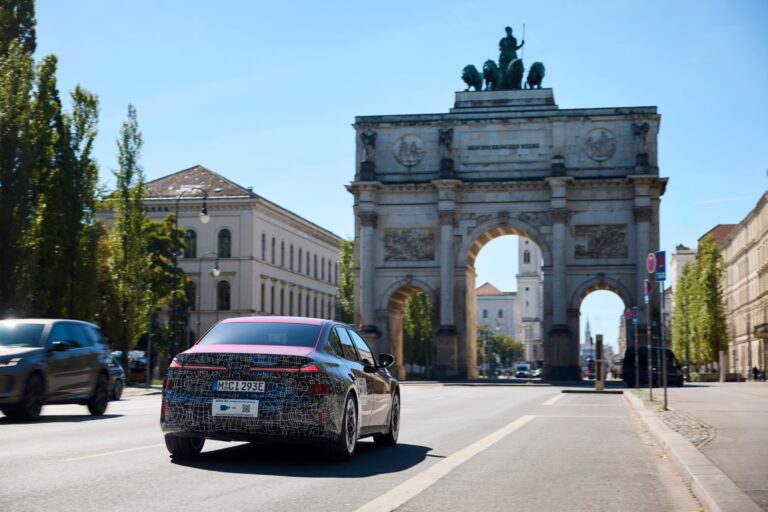
Munich. BMW is preparing a new stage in the development of its driver assistance systems. From 2027, the German brand will begin to incorporate the functions of driving semi-autonomous in urban environments, able to assist in maneuvers such as turns, lane changes, traffic roundabouts and situations of priority pass.
The evolution of the technologies driving assistance continues to transform the relationship between cars and their drivers. In this scenario, BMW announced that it will expand the capabilities of your driving systems partially automated to provide an experience more seamless on different types of roads.
The driving semi-autonomous BMW will take an important step in 2027, when the company plans to introduce new functions-guided navigation that will allow you to extend the assistance from the runway to the streets of the cities.
Germany will be the first market to receive these technologies, while its availability in other countries will be expanded progressively, in accordance with the plans of implementation and the appropriate authorisations.
The goal is that drivers can use various assistance functions during a single journey, without relying exclusively on the usual conditions of movement on highways.
Driving semi-autonomous BMW: assistance from the highway to the city
One of the main innovations announced by BMW is the integration of their systems Motorway Assistant and City Assistant with the functions of navigation of BMW Maps.
This combination will allow the car to offer assistance during tours, including motorways, secondary roads and urban areas, by maintaining a transition more going on between different driving scenarios.
Up to now, numerous technologies driving partially automated have focused their skills on roads with relatively predictable, as well as highways and pathways controlled access.
However, the cities represent an additional challenge due to the presence of intersections, traffic lights, roundabouts, vehicles that circulate in different directions and situations that require you to interpret the priorities of step.
With the new features planned for 2027, BMW seeks to expand the capacity of their systems to assist the driver in precisely these circumstances.
Among the maneuvers that will be able to receive assistance are the spin-guided navigation, lane changes in urban areas, the circulation in roundabouts and certain situations related to the priority pass.
The company also remember that your City Assistant already allows, in certain markets, such as Germany, to perform functions automatic start and stop with the traffic lights.
The expansion announced seeks to integrate these skills within a driving experience assisted more complete.
Technology SAE Level 2: the driver maintains responsibility
Although the new functions will allow to partially automate certain tasks of driving, BMW stresses that these systems are classified within Level 2 of the automation of the SAE.
This classification means that the car can provide assistance for simultaneous control of the steering and the acceleration or deceleration under specific conditions.
However, the driver must remain attentive to the environment, to continuously monitor the operation of the system and be prepared to intervene when necessary.
Therefore, these technologies do not make the vehicle on a car completely self-contained or allow occupants desentiendan of driving.
The functions can only be used when the system recognizes that the driver maintains the necessary attention.
This feature is especially important in urban environments, where traffic conditions can change rapidly and require continuous monitoring.
For BMW, the development of these technologies do not seeks to eliminate the participation of the driver, but to provide tools able to reduce certain workloads, and improve the comfort during the travel.
BMW Symbiotic Drive: a more natural interaction between driver and car
One of the central elements of this technological evolution is the BMW Symbiotic Drive, a concept that seeks to establish a collaboration more intuitive between the driver and the vehicle's electronic systems.
Unlike systems that require a separation more and more marked between human intervention and the automated assistance, this technology allows both forms of control interact in a coordinated manner.
When the assistance functions are activated, the driver can intervene with the steering wheel, accelerator or brakes without necessarily being interrupted by full collaboration with the system.
In this way, BMW aims to provide an experience in which the technology accompany the decisions of the driver, while respecting their personal style of management.
This principle also applies to certain features of active safety, such as the maintenance wizard lane.
The vehicle is able to interpret the intentions of the driver by information related to the movements of the steering wheel and the direction of her gaze.
Thus, the system seeks to distinguish between a voluntary manoeuvre and a deviation unintentional path.
When you identify a situation that requires attention, you can provide warnings or intervene in the management in accordance with the conditions detected.
The intention is that the medical work of the least intrusive manner, maintaining a more natural between human decisions and the e-skills of the car.
BMW Panoramic iDrive will facilitate the monitoring of the systems
The incorporation of new driving functions partially automated also requires interfaces that allow to easily understand what is making the car.
For this reason, BMW will integrate these technologies with your system BMW Panoramic iDrive, developed to present relevant information in an intuitive way.
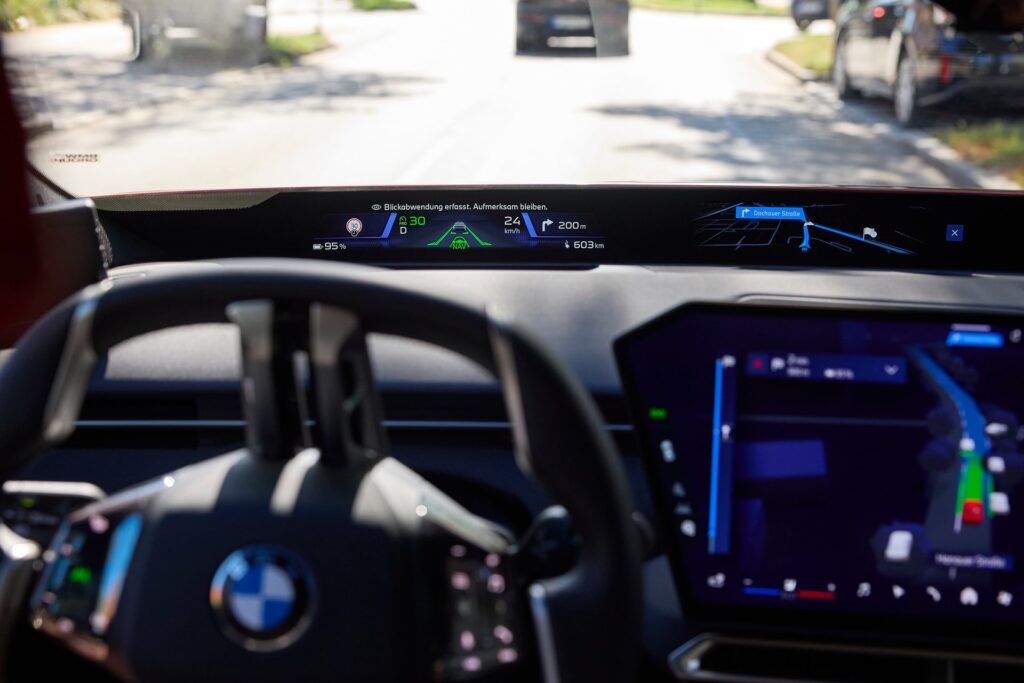
By BMW Panoramic Vision, the driver is able to check information related to the status of the assistance functions directly within your visual field.
This presentation seeks to reduce the need to divert attention to other areas of the passenger compartment.
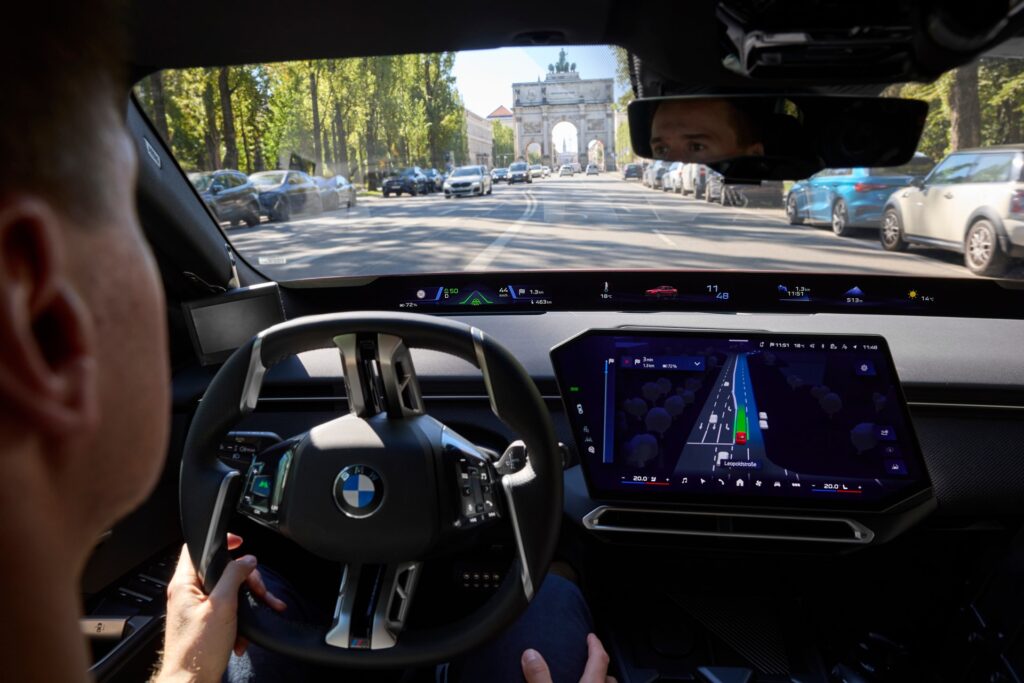
Another important tool will be BMW Maps with Driver Assistance, a new navigation display that will combine different sources of information in a three-dimensional representation within the central screen.
This interface will show the following indication of navigation, a representation of the environment detected by the automobile and the functions of assistance that are participating in the driving.
The combination will allow the driver to understand better how to interpret the vehicle specific traffic situations.
In complex scenarios, such as intersections or embodiments, this information can contribute to the use of the medical assistance is more clear and predictable.
The BMW iX3, iX4, 3 Series, 7 Series and X5 will incorporate technology
BMW also confirmed that the technical equipment necessary to use the new functions will be installed in various models of its range.
Among the vehicles covered are the new BMW iX3 and BMW iX4, as well as the different variants of the BMW 3 Series, 7 Series and X5.
The strategy will allow owners can enable assistance features are available after you have purchased your car, provided that you comply with the terms of availability applicable.
This will be possible through wireless software updates, known as OTA (Over-the-Air) updates.
In this way, certain capabilities may be incorporated without the need to make physical modifications in the vehicle.
The installation of the hardware from the factory represents an important decision within the technology strategy for BMW, as it allows to prepare your car to get new features during its useful life.
However, the availability of each function depends on the model, the market and the applicable approvals.
BMW also plans to extend these technologies to other vehicles in its catalogue as to move forward in its implementation.
BMW exceeds an important stage in the approval of their systems
The development of the new features of driving semi-autonomous BMW has also reached a significant advance in the field of approval.
The company reported that a technical service independent successfully completed the necessary testing on the actual conditions of traffic.
These assessments are part of the procedure corresponding to the regulations UNECE R171, in its update DCAS Series 2, which establishes requirements for certain systems of assistance to the vehicle control.
The results obtained indicate that the new technologies met the technical requirements evaluated within this process.
However, the approval official is still pending and BMW expects to receive confirmation at the beginning of 2027.
This procedure represents a fundamental stage before introducing the functions in vehicles on public roads.
The regulation of the assistance systems and advanced search to establish technical conditions and safety that allow them to incorporate new capabilities without losing sight of the responsibility of the driver.
For BMW, pass these tests constitutes a relevant step towards the commercialization of its new urban functions.
Germany will be the first market to receive the new features in 2027
The initial release of the new technologies is planned for Germany during 2027.
Subsequently, BMW plans to expand its availability to other countries gradually, although it still has not confirmed a specific timetable for each market.
This means that, for the moment, there is no announced date for its introduction in Mexico or in other countries of Latin America.
The international expansion will depend on factors such as regulatory approvals, the availability of the functions and the particular conditions of each market.
The company also reported that it has filed several patent applications related to the development of these new technologies support in urban environments.
These requests reflect the work of engineering that BMW is performing to extend the capabilities of their vehicles, and improve the interaction between automated systems and their drivers.
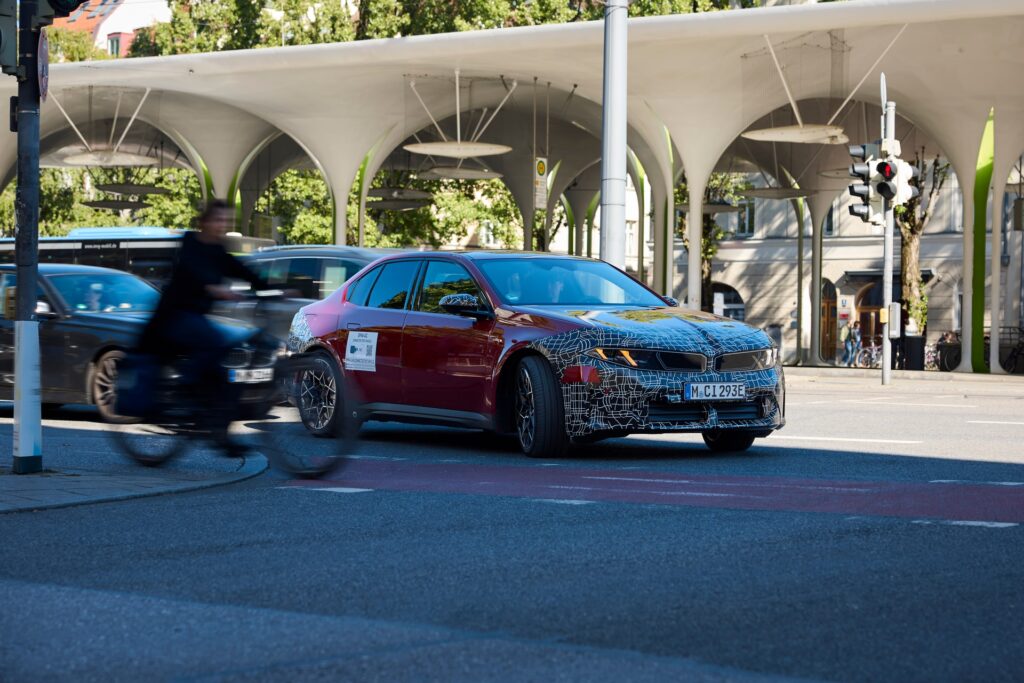
The future of driving-assisted, will also be developed in the cities
The enlargement of the functions of driving semi-autonomous BMW represents an important evolution in the way in which cars can accompany their drivers during daily movements.
While the motorways have been one of the main scenarios for the development of advanced systems of support, the urban environments pose challenges more complex due to the diversity of situations that may arise during a tour.
The integration of active navigation, sensors, control systems and digital interfaces seeks to respond to these needs by using a driving experience more continuous.
With BMW Symbiotic Drive, the German brand also maintains its philosophy of keeping the driver as the protagonist, allowing him to participate actively even when the medical electronic are working.
The incorporation of hardware ready for future updates, adds another dimension to this strategy, by allowing certain vehicles to receive new capabilities through software.
From 2027, BMW will seek to demonstrate that the evolution of the conduction partially automated does not only extend the tasks that you can perform a car, but also in improving the cooperation between the technology and the person who remains behind the wheel.
A transformation that could make the streets of the cities the next big stage for the development of intelligent systems for driving assistance.
Source: BMW Group