

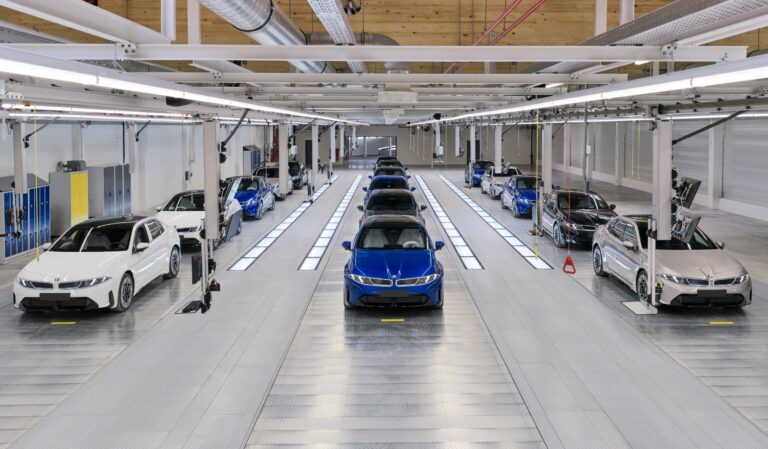
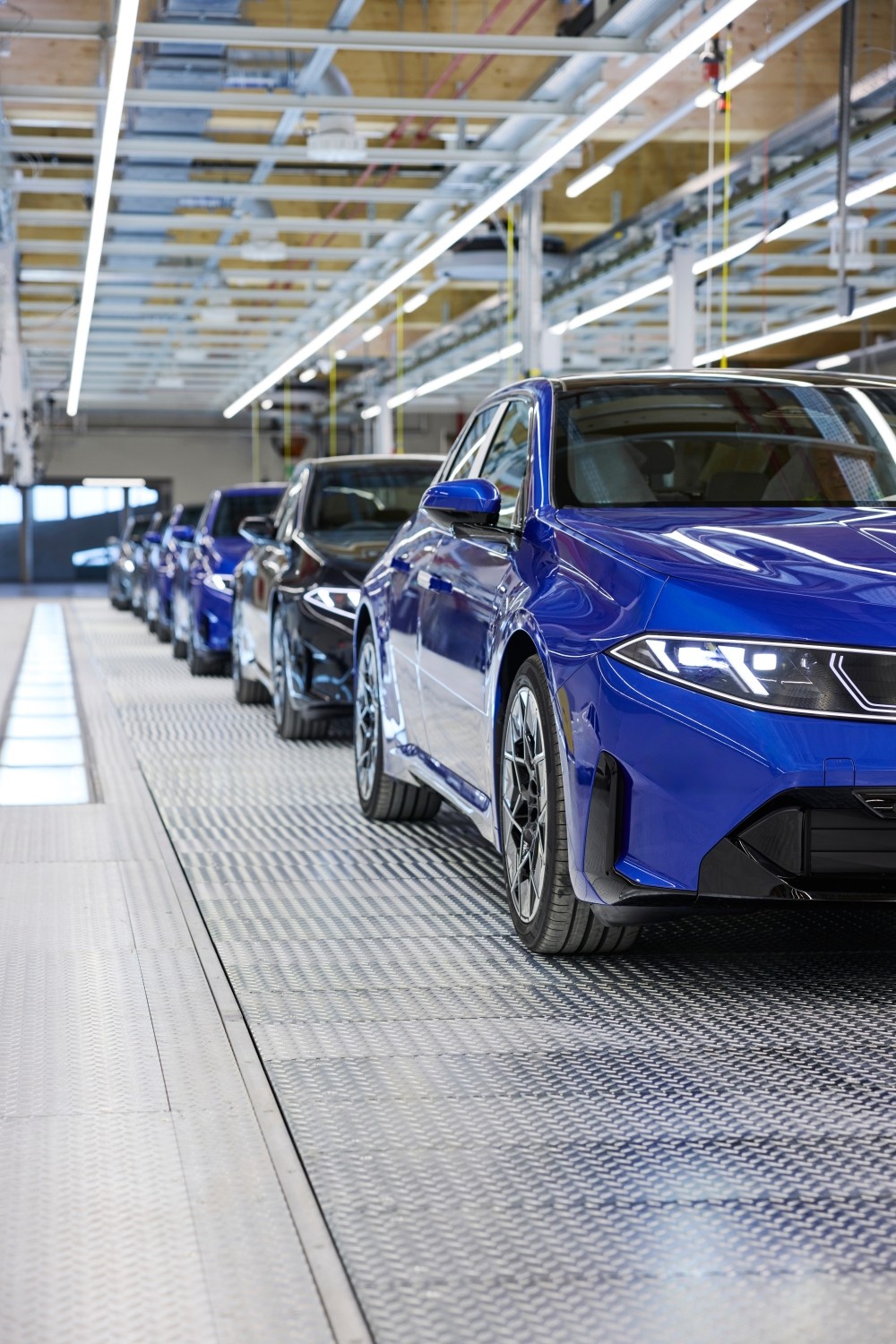
Munich. The arrival of the BMW i3 represents one of the most important moments for BMW in the last few years. The German brand has officially started series production of this new model on the historic ground of Munich, the installation completely transformed to respond to the demands of the electromobility and the long-awaited New Class. The high demand since the opening of advance orders confirms the enormous interest in this new generation of electric vehicles.
The BMW i3 not only opens a new stage for the factory more emblematic of the bavarian manufacturer, but also shows how BMW is redefining the industrial strategy through more efficient processes, a production highly digitized, and an international network able to manufacture electric vehicles at lower costs and higher quality standards.
The BMW i3 comes with a demand than expected
Since mid-June, when BMW opened early orders of the BMW i3, the response of the market has been especially positive. This high level of interest has forced the plant Munich to accelerate the increase in production to meet the initial demand, something that confirms the confidence of the customers in the New Class.
Jochen Goller, member of the Board of Management of BMW AG responsible for Customer, brands and Sales, emphasized that the acceptance of the model has exceeded expectations.
According to the steering, the BMW i3 maintains the excellent momentum generated by the first model of the New a-Class and confirms that the new electrical platform responds exactly what customers are looking for: better efficiency, advanced technology, improved autonomy and a driving experience completely renewed.
This behavior of the market is especially significant because the BMW i3 represents the beginning of a new family of electric vehicles that will define the future of the brand for the next decade.
The plant Munich enter a new phase with the BMW i3
The production of the BMW i3 is also the beginning of a new era for the main floor of the BMW Group in Munich.
For four years, the factory underwent a profound transformation that included the construction of a new body shop, new assembly lines, modern logistics areas, and fully digitized able to respond to the needs of the electricity production.
Unlike other renovations industrial, BMW managed to make this massive transformation without completely stopping the production of vehicles, maintaining a capacity of close to 1,000 units a day while you are developing new facilities.
Raymond Wittmann, responsible for Production of BMW AG, explained that a few models represent both the essence of BMW and the 3 Series, and now the BMW i3 sets out that legacy to bring it fully to the world of electricity.
The tight integration between the departments of development, engineering and production becomes in addition to the plant of Munich in a real laboratory for the entire global network of manufacturing of the BMW Group.
A 10% reduction in manufacturing costs
One of the highlights of the start of production of the BMW i3 is an important improvement in industrial efficiency.
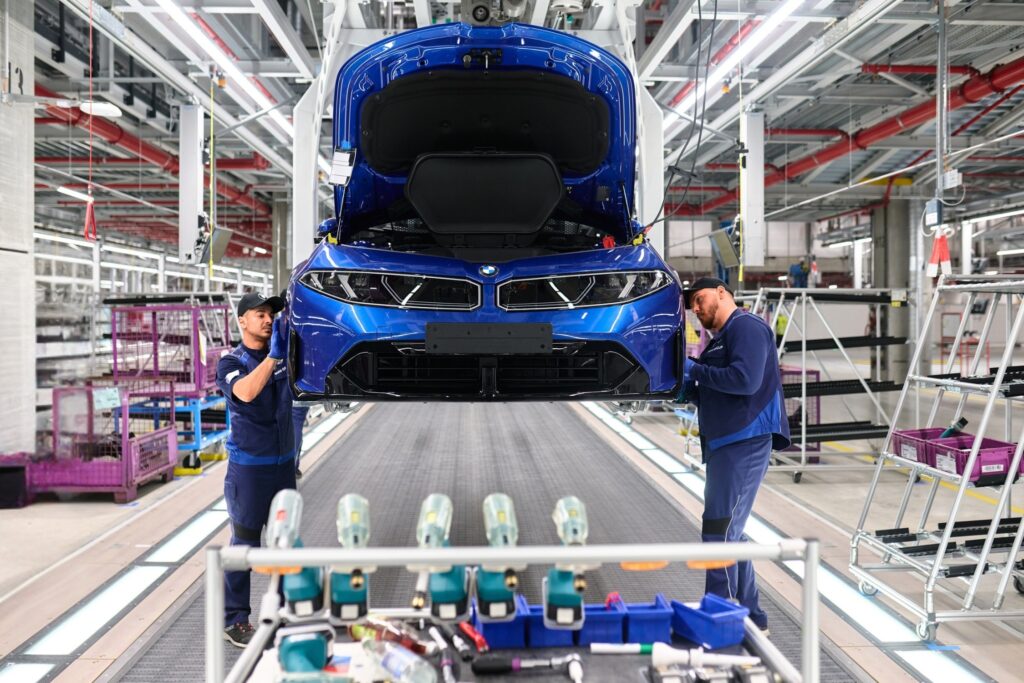
BMW has confirmed an additional reduction of 10 % in manufacturing costs due to a number of factors that work together.
The planning began from the earliest stages of vehicle development, allowing engineers, suppliers, and specialists in production design optimized processes from the start.
Added to that is a automation much more advanced, new digital systems, artificial intelligence applied to the control of quality and architecture of the vehicle, specifically developed to simplify manufacture.
Peter Weber, director of the BMW Group in Munich, said that the new model allows to further reduce costs without compromising quality, while maintaining the high standards that characterize the brand.
The combination between technological innovation and intelligent processes makes the BMW i3 in one of the most efficient vehicles of manufacture within the recent history of BMW.
The New Class has completely transformed the production of BMW
Beyond the launch of a new car, the BMW i3 symbolises the beginning of a new philosophy industrial.
The New Class consists not only in a platform completely new electric power, but also in a different way, to develop, to manufacture and upgrade vehicles.
Its architecture has been designed to simplify many components, reduce the complexity of the assembly, and improve efficiency throughout the production cycle.
It allows to reduce production times, optimize the energy consumption within the plant and to facilitate future technology upgrades.
BMW believes that this new platform will be the basis of many models over the next few years, becoming the main axis of its strategy of electrification.
Munich will produce only electric vehicles from 2027
The transformation of the plant Munich does not end with the BMW i3.
BMW has confirmed that, starting in 2027, this historical facility will manufacture only all-electric vehicles.
It is a strategic decision that reflects the commitment of the company with the mobility of emissions and with a production becoming more sustainable.
In addition to the BMW i3, other models of the New a-Class will begin to occur progressively in this factory, ensuring their activity during the next few decades.
Peter Weber stressed that the real engine of this transformation are not only new technologies, but the people responsible for continually push innovation.
As explained, the digitization and automation to increase efficiency, but they are still the workers who make those technological advances in concrete results.
BMW iFACTORY: the vision of the future industrial
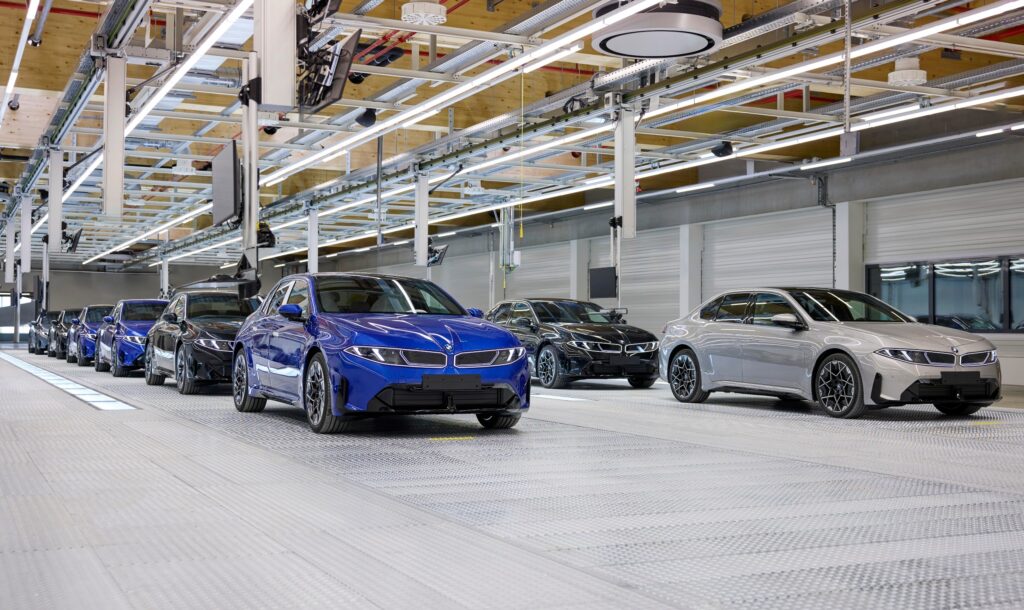
This whole process is part of the global strategy called the BMW iFACTORY.
This initiative defines the vision of production of the German manufacturer based on three fundamental pillars: efficiency, sustainability and digitalisation.
Each plant adapts these principles according to their own characteristics, allowing it to maintain a network of manufacturing flexible, resilient and able to respond quickly to the needs of the market.
The plant of Munich represents one of the most advanced examples of this strategy.
The integration of twins digital, intelligent automation, monitoring systems in real time and processes fully connected allows you to continuously optimize the production of the BMW i3.
Thanks to this, the company improves productivity, reduces waste and maintains a permanent control on the quality of the vehicle.
A regional supply chain for the BMW i3
BMW has also stepped up its strategy called “local for local”, approaching the manufacture of the principal components to the plants where they are assembled vehicles.
The new high-voltage batteries of the sixth generation will be produced in the plant of Irlbach-Straßkirchen, located in Bavaria, approximately ninety minutes from Munich.
From there they will provide directly to the production of the BMW i3 and other German factories.
These batteries incorporate processes of manufacture of the latest generation based on quality controls are permanent, artificial intelligence and twins digital able to detect any deviation before it reaches the assembly line.
The goal is to achieve virtually a standard of zero defects throughout the production.
The electric motor Gen6 comes from Austria
Another key element of the BMW i3 is your new electric propulsion system Gen6.
This mechanical assembly is manufactured at the BMW Group in Steyr, Austria, a facility with more than four decades of experience in developing propulsion systems.
There are produce all the major components of the electric motor, including rotor, stator, inverter, transmission and various electronic elements are highly integrated.
The plant incorporates new production lines and modern, clean rooms are designed to guarantee the maximum precision during assembly.
For its part, the die-cast aluminium Landshut provides the housing of the electric motor, completing a supply chain that is fully integrated in the european network of the BMW Group.
The BMW i3 represents much more than a new model
Although the start of production of the BMW i3 has a huge industrial importance, its meaning goes far beyond a new addition to the catalog.
This vehicle officially inaugurated the expansion of the New Class, a generation that will redefine the design, the technology, the connectivity and efficiency of the BMW over the next few years.
It also symbolizes the profound change that is living in the automotive industry, where the competitiveness does not only depend on the final product, but also the ability to make smarter, sustainable and flexible.
The transformation of the plant Munich shows that BMW bet for keeping the production in Europe while modernize their industrial processes to compete in the global market of electric vehicles.
The start of production of the BMW i3 marks a before and an after for BMW. The combination of a completely new platform, a plant deeply transformed and an industrial strategy based on the scanning positions the brand to tackle the next stage of electric mobility.
With an initial demand than expected, an additional reduction of 10 % in the manufacturing costs and the commitment to convert the plant Munich in an exclusive center for electric vehicles starting in 2027, the BMW i3 turns into much more than a new car. Represents the starting point of a new generation of BMW that will combine innovation, efficiency and sustainability to define the future of the brand.
Source: BMW Group