

Munich. The transformation of the automotive industry not only depends on electrified vehicles. It also involves rethinking the way in which it is obtained, used, produced and recycled materials that are part of each car. In this sense, the BMW Group has just completed a research project that could have a major influence in the making of their future models.
For three years, the BMW Group, together with specialist companies and research institutions, worked on the project “Sustainable Materials for Car of the Future” (FSCM), an initiative focused on finding new solutions to reduce the carbon footprint and moving towards a circular economy within the automotive industry.
The project was only in the research laboratory. One of its main objectives was to develop solutions that could approach the conditions of a serial production, demonstrating that recycled materials and new design concepts can be incorporated into vehicles without sacrificing safety, quality or functionality.
The result was an investigation, divided into four major areas: plastics, metals, scanning and design for circularity. Each one addresses a different problem, but all have the same objective: to use the resources more efficiently and to keep materials within the production cycle for as long as possible.
BMW seeks recycled materials to reach series production
One of the main challenges for the automotive industry is increasing the use of recycled materials without compromising the features you need in a modern vehicle. It is not enough that a material is more sustainable; it must also meet strict requirements of strength, quality, safety, appearance and production costs.
Precisely for this reason, the project FSCM sought to bring solutions closer to a real application.
In the area of plastics, BMW and its partners analysed various possibilities for reducing the emissions of CO₂ equivalent associated with large components. Among the solutions studied were recycled material from both of the products used previously as waste generated during the manufacturing processes.
Also explored concepts of closed-cycle, in which the materials from vehicles that have reached the end of their useful life can go back to the productive process.
The researchers developed materials with lower emissions of CO₂ equivalent to components such as brackets from the panel of instruments, lights, and siding. Subsequently, these solutions were subjected to tests to compare them with components used in production vehicles.
The results were especially positive in certain applications. For example, the holders of the instrument panel and the rear lights were able to incorporate solutions with a recycled content of considerably more.
However, the project also allowed us to identify the current limits of this technology. In components, where the security or the optical characteristics are especially important, recycled materials still may not reach the level of the plastics that are virgin.
This conclusion is also important: to move towards more sustainable production does not mean replacing all of the conventional materials in an immediate way, but to determine where material can be used as recycled safely and efficiently, and where you still need to research.
Less steel and aluminum, but without compromising security
Metals represent one of the major challenges for the automotive industry. The steel and aluminum are fundamental to the structure of the vehicles, especially in those areas where the resistance and the protection of the occupants are a priority.
For this reason, the project FSCM worked on two parallel paths: use a smaller amount of material, through new concepts of components and increase the proportion of recycled metals.
The idea is simple, even though technically complex. If a component is able to perform the same functions using less material, it can reduce the resources required to build it. At the same time, to replace primary raw materials by recycled materials can reduce the environmental impact associated with its production.
The demonstrations carried out during the project included structures of the body relevant to the security. The results showed that it is possible to make a more efficient use of the materials without compromising the requirements related to safety in the event of a collision or standards of quality.
This is especially relevant because it shows that sustainability does not have to be opposed to the performance of a vehicle.
The key is to develop materials and components capable of meeting the same requirements using resources in a different way.
The scan also form part of the circular economy
Although talk of sustainability automobile is often taken immediately to think of recycled materials, FSCM also put special attention on a tool that will be increasingly important for the industry: the data.
Within the project were developed digital tools designed to facilitate the incorporation of sustainable materials in the different stages of the development of a vehicle.
One of the main elements was a digital platform able to collect and compare information related to the properties of the materials, the results of the tests and different sustainability criteria.
This may seem like a secondary aspect, but has a considerable importance. For a new material to reach a production vehicle, the engineers need to know, with precision, its characteristics and limits of application.
A platform which brings together this information enables you to evaluate, from the early stages if a particular material can be used, what is the percentage of recycled content can incorporate it, and under what conditions it maintains the characteristics needed.
In this way, the scanning may become a bridge between the research and the production in series.
For BMW, the aim is not only to develop more sustainable materials, but to create processes that allow to identify, evaluate them, and use them faster and more reliable.
Design thinking at the end of the life of the vehicle
Perhaps one of the more interesting of the project FSCM is the Design for Circularity.
Traditionally, the design of a car is concentrating on aspects such as functionality, safety, ergonomics, manufacturing, and appearance. The approach of circularity proposes to incorporate from the beginning ask another question: what will happen to these materials when the vehicle end of its useful life?
From this idea, the researchers developed concepts aim to reduce the use of materials, to integrate different functions into a single component, and facilitate separation and recycling at the end of the useful life.
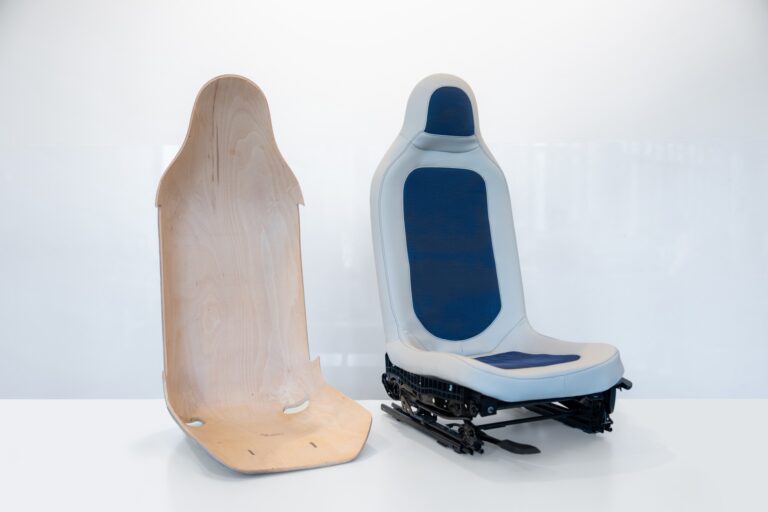
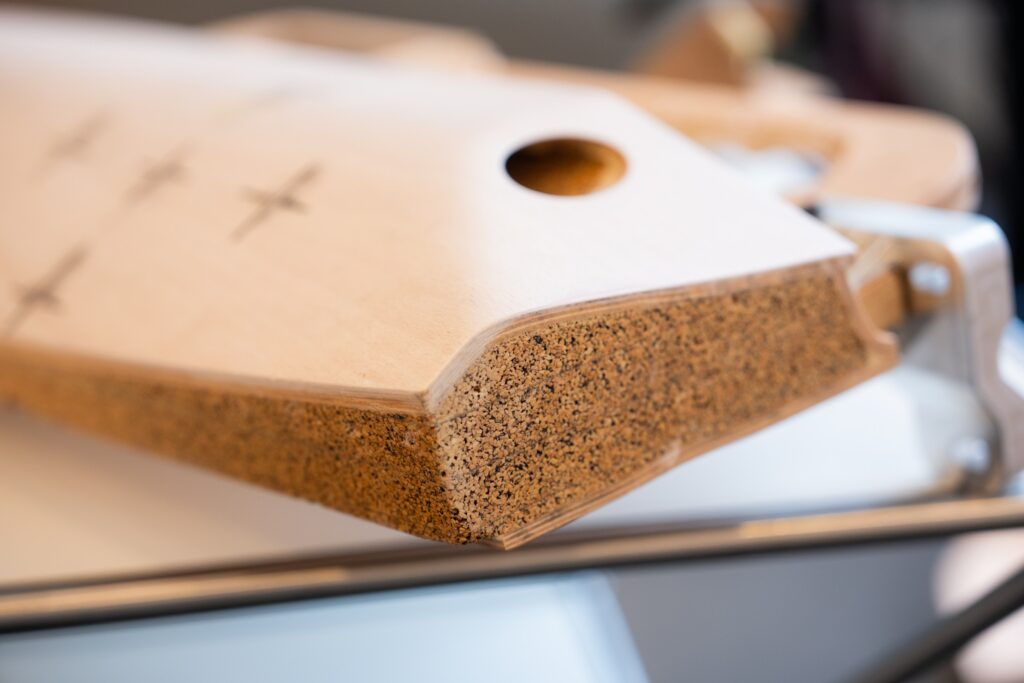
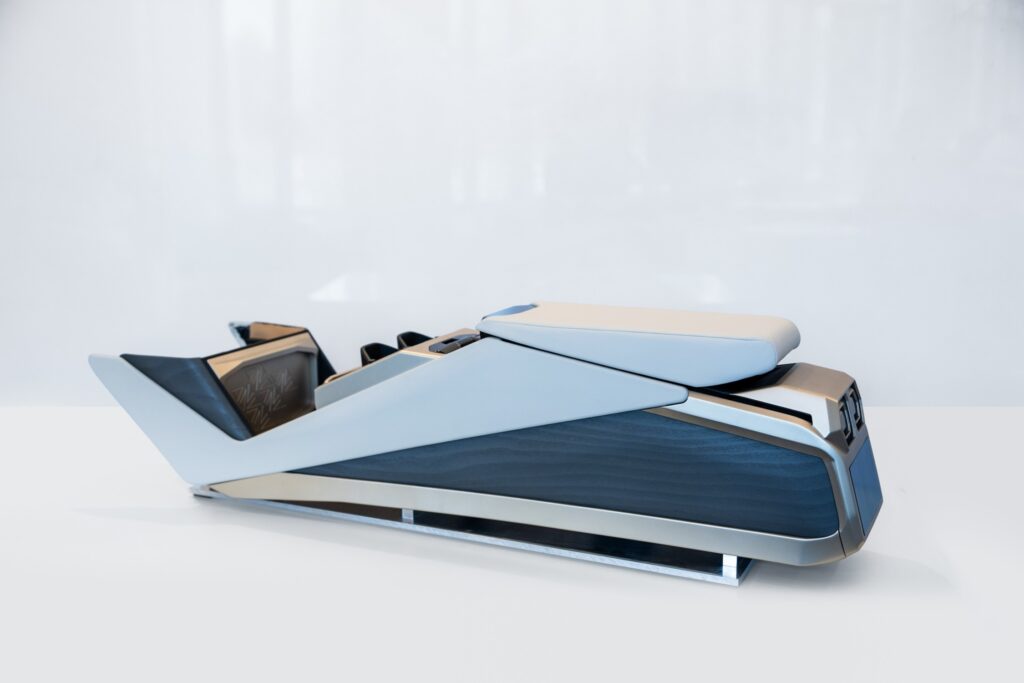
Among the demonstrators developed are a concept of seat type, seat, a cabin made of wood and cork, and a new concept of door panel.
This last one is especially interesting because it integrates a structural role to support items such as the interior handle and the armrest. The intention is to demonstrate that a design thought for the circularity can reduce materials and allow the use of alternatives, while still providing a high level of protection for the occupants.
The concept changes, therefore, the way of understanding sustainability.
It is not only search for a recycled material to replace another. It is also about designing the component from the beginning to use fewer resources and to facilitate their recovery afterwards.
The BMW iX3 already takes these ideas to the production
One of the most important aspects of the research is that its results do not remain solely in the area of the prototypes.
BMW points out that the principles developed in FSCM already found a particular application in the models of the Neue Klasse, among them the new BMW iX3.
According to the information provided by BMW, approximately one-third of the new BMW iX3 50 is composed of recycled materials.
Examples include components of cast aluminum as the bearings and pivot brackets wheel, the latter with a recycled material content of 80 %. We will also mention wheels of cast aluminum with a 70 % recycled aluminium.
Beyond the numbers, this shows where you are pointing BMW with its new generation of vehicles.
Electrification is one of the pillars of the Neue Klasse, but it is not the only one. The electrical architecture, the software, the scan and now also the way in which materials are used and form part of a transformation much more extensive.
The new iX3 thus becomes an example of how some of the research carried out during the years they can start to move vehicles that come to production.
What does this mean for the future of BMW?
The project FSCM concludes after three years, but their results point towards a transformation that is just beginning.
BMW seeks to establish a strategy in which the materials can retain their value over several cycles of life, reduce the dependence of primary raw materials and to progressively increase the use of recycled materials of high quality.
To achieve this, the company is working on different stages of the value chain. Since the development of new materials to the design of components, through digital tools that allow us to know and compare their characteristics.
The big challenge will be getting these solutions can be scaled efficiently to an automotive production of large volume.
Research FSCM demonstrates that some of them are already mature enough to get closer to that goal. At the same time, it also makes it clear that there are still applications where the recycled materials they need to evolve before completely replace the conventional materials.
This is particularly important in an industry where each component must meet specific requirements.
A new way of understanding the sustainability automotive
The evolution of the BMW to a production more circular shows that the future of the electric car will not be defined only by the battery, or autonomy.
The next generation of vehicles will also have to answer questions related to the materials, the manufacturing processes and the fate of each component once the car finished their useful life.
The project FSCM represents a step in that direction by showing that the research can become solutions close to the production and, subsequently, getting to series vehicles.
In the case of BMW, the new iX3 is one of the earliest examples of this transition. His use of recycled materials shows that the circularity may cease to be only a goal of research to progressively become part of the manufacture of automobiles.
For the industry, the challenge will be to continue closing cycles without compromising the security, performance, and quality that consumers expect.
And to BMW, the bet seems clear: the car of the future will not only need to consume less energy during its use, you also need to take better advantage of the resources from the moment it begins to be manufactured until long after they stop circulating.
Source: BMW Group