

One of the core elements of this strategy is the production cluster of Bavaria, where the plants Dingolfing, Landshut, Irlbach-Straßkirchen and Munich concentrate different processes and skills. This structure allows to reduce transport distances and connect more efficiently the various stages of manufacturing.
For Mexico, the project also becomes important, because later on the new BMW i3 will be produced at the Plant, the BMW Group San Luis Potosí, strengthening the participation of the country within the global network of production of the company.
Smallest footprint of CO₂e from the supply chain
BMW Group notes that the supply chain represents one of the main areas of action to reduce the emissions of CO₂e associated to the vehicle. Therefore, the company combines the use of renewable energies, secondary materials and new production processes.
These measures apply to the different variants of powertrain of the new BMW 3 Series. According to BMW Group, during the development phase was reduced to around 37% of the emissions of CO₂e of the supply chain are planned for the BMW i3 and about 30% for the version with internal combustion engine. These figures are preliminary and will be updated before the start of production.
The battery cells Gen6 used by the BMW i3 incorporate secondary materials in part of the cobalt, lithium and nickel. In addition, BMW Group uses electricity from renewable sources in the production of materials for the anodes and cathodes, as well as in the manufacturing of their own cells.
In comparison with the cells Gen5 used in the BMW i4, the footprint of CO₂e per watt-hour was reduced by approximately 33%.
Recycled materials in components high demand
The use of secondary materials also extends to the various components of the vehicle. Among them are pieces of aluminum of the suspension, such as rims, hubs and wheel holder, whose production incorporates electricity from renewable sources.
The body also integrates recycled materials. The hood of the new BMW 3 Series is manufactured with approximately 70% of recycled aluminum.
In the case of the BMW i3 50 xDrive, around 31% of the vehicle is composed of the secondary material, while in the BMW 3 Series with internal combustion engine, the ratio is close to 25%.
This strategy allows you to reduce the need for primary raw materials and forms part of BMW Group to incorporate recycled materials in different areas of their vehicles.
A production cluster connected in Bavaria
The concentration of competences for industrial plants Dingolfing, Landshut, Irlbach-Straßkirchen and Munich enables you to establish connections more direct between the different production processes.
The closeness between the facilities reduces the distances that must be travelled certain components and facilitates the integration of specialized processes. For BMW Group, this structure represents an opportunity to combine production efficiency with sustainability objectives.
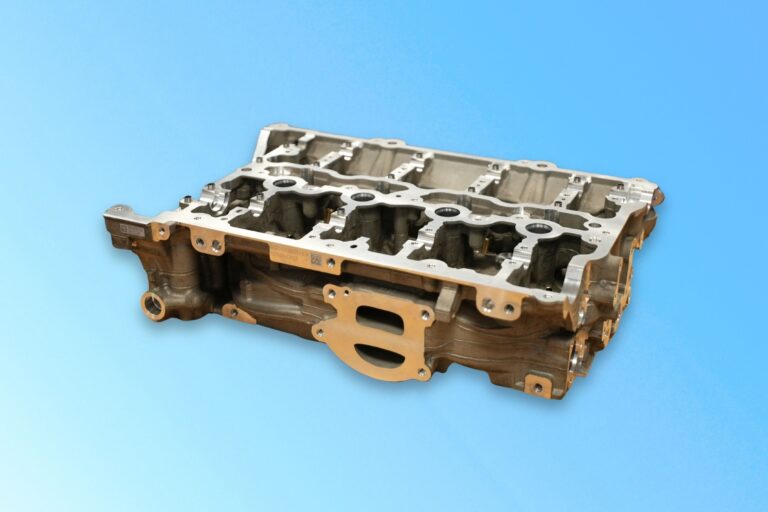
The Plant Landshut, for example, is a centre of expertise for the manufacture of components and works with light metals. For the new BMW 3 Series produces, among other elements, the housing of the electric propulsion system on the rear axle of the version totally electric, in addition to components for the model with a combustion engine.
The powertrains are produced in the Plant Steyr, in Austria, that has over four decades of experience in this field.
Batteries Gen6 produced close to the vehicle
The Plant Irlbach-Straßkirchen will have an important role in the production of the BMW i3. The construction of the facilities for the assembly of high-voltage batteries Gen6 began in the spring of 2024, and as of October 2026, it is expected that supplies the batteries for the BMW i3.
The concept called “local for local” aims to bring the production of key components to the plant where they are manufactured vehicles. In this case, the batteries will be transported to Munich by electric trucks.
The installation is also designed to operate without fossil fuels during their usual activities. A portion of the electricity needed will be generated by a photovoltaic system installed on the site itself, while the extra energy will come from renewable sources.
BMW Group also noted that the assembly of the batteries is designed to not require water during the process, with the goal of reducing the consumption of resources.
Munich and Dingolfing move toward a more efficient production
The Plant Munich is part of the transformation of the BMW Group towards the concept BMW iFACTORY, based on three pillars: efficiency, digitalization and sustainability.
The electricity acquired externally to its operations comes from renewable sources. In addition, the plant recovers materials from the pressing process of the body. The waste of steel and aluminum are separated and recycled for later use in the manufacture of new coils.
In Dingolfing, all purchased electricity also comes from renewable sources, while part of the energy is generated directly at the premises. Since the end of 2025, a photovoltaic system installed on the roof of the plant has a capacity of close to 11 megawatts peak.
The plant also included an installation of a biomass heating is able to provide up to 100,000 megawatt hours of heat produced locally from renewable sources. With this, the BMW Group is seeking to cover approximately half of the heat requirements of the process of the installation.
Efficiency also during the driving
The sustainability strategy of the BMW 3 Series doesn't end with manufacturing. During the use stage, BMW Group uses different technologies to improve the energy efficiency.
The technology package EfficientDynamics integrated solutions related to aerodynamics, lightweight construction, tyres for low rolling resistance and energy management.
In the BMW i3, these solutions are combined with the technology of propulsion Gen6 and with the system of control called “Heart of Joy”, accompanied by the BMW Dynamic Performance Control Driving Stack.
The system allows you to manage more precisely the dynamic response of the vehicle and increase the recovery of energy during phases of deceleration. BMW Group also points out that the use of technology of silicon carbide (SiC) in the units of electric propulsion allows to reduce the energy losses by up to 40%.
BMW Group prepares a carbon footprint verified
As part of its strategy of transparency, BMW Group will publish the carbon footprint of the product of the new BMW 3 Series, which has been validated by TÜV, coinciding with the start of series production.
The report shall include the methodology and calculation methods used to determine the emissions of CO₂e generated during the different stages of the life cycle of the vehicle.
The company also uses the rules of Catena-X to calculate the carbon footprint of components and individual materials. This ecosystem allows you to standardize the exchange of information and enhance the traceability of the data of emissions along the value chain.
With the integration of secondary materials, renewable energy, producing regionalised and technologies aimed at greater efficiency, the new BMW 3 Series poses a sustainability approach that encompasses both the electric and combustion. For Mexico, the next step will be the addition of the new BMW i3 to the production of San Luis Potosí, strengthening the role of the mexican plant within the industrial strategy global BMW Group.
Source: BMW Group